
“OK, Dad”
When presence matters more than resolution, and whispered grace speaks louder than answers.

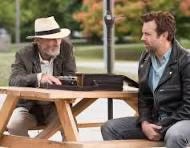
On October 6, I shared some thoughts on the film Kodachrome (noting that it contains strong language) — a story that traces a father and son’s strained relationship during a final road trip together. At its heart, the movie explores themes of regret, forgiveness, and the fragile ways love can surface when time is running short.
(If you missed that reflection, you can read it here.)
I don’t share this to recommend the film itself so much as to draw out its themes, which mirror so many of our own unfinished stories. Even if you didn’t catch that earlier piece, you can step right into this one. I want to linger for a moment with the film’s closing scene — a place where words are few, but grace is quietly present. It captures what I call the liminal space — the holy tension between what was, what is, and what will never fully be.
Ben’s Deathbed Scene
In the closing moments of Kodachrome, Ben Ryder — once a renowned, brash photographer — lies frail in a hospital bed. His body is failing, his bravado gone. For perhaps the first time, he lets down his guard and admits with trembling honesty to his estranged son: “I’m scared.”
The confession is startling. It is not only about death but about a lifetime of distance and regret. Ben’s son, Matt, has every reason to keep his heart closed. Yet, in that liminal space between life and death, anger and tenderness, past and future, Matt chooses presence over bitterness. Leaning in, he whispers softly: “OK… OK, Dad.”
Those two words are understated, yet holy. They do not erase years of pain. They do not solve every question. But they name a new reality: mercy in the middle of fracture, grace in the tension of what was and what will never fully be.
This is the essence of the liminal space — the in-between where old wounds remain but new love can still break through.
“He has made everything beautiful in its time. He has also set eternity in the human heart; yet no one can fathom what God has done from beginning to end.”
— Ecclesiastes 3:11
A Moment to Consider
Liminal spaces rarely come with neat resolutions. They are full of ambiguity — unfinished conversations, unhealed wounds, love that feels too late. Yet these are the very places where God often does His deepest work.
Matt’s whisper to his dying father is a picture of this truth. It shows us that waiting, watching, and simply being present can carry more grace than any polished words. In the in-between, we are shaped — not by certainty, but by compassion. Not by resolution, but by presence.
Waiting does not diminish us. In God’s hands, it becomes the ground where forgiveness takes root, where love softens what bitterness has hardened, where eternity breaks through the cracks of time.
Where are you standing in a liminal space — between what was and what cannot fully be restored?
How might God be inviting you to practice presence instead of resolution?
Who in your life needs not your answers, but your willingness to whisper grace in their fear?
Prayer
Father,
You meet us in the spaces where words run out
and reconciliation feels unfinished.
You teach us that love is not always about resolution,
but about presence, mercy, and grace given in fragile moments.
Give me courage to show up in the waiting,
to stay tender even in the tension,
and to trust that You are making all things beautiful in time.
When my own words fail,
let my presence become a prayer of love.
Lord of the in-between. Come.
That word "presence" keeps landing for me!
Experiencing and acknowledging the presence of God is a primary pathway to His grace, a grace that is not only immeasurable toward us but is meant to overflow from us to others. True peace can only be attained through grace. All for His glory!